How to Choose the Right Ceiling Light for Your Living Room
- Posted on
- By Jack Inston
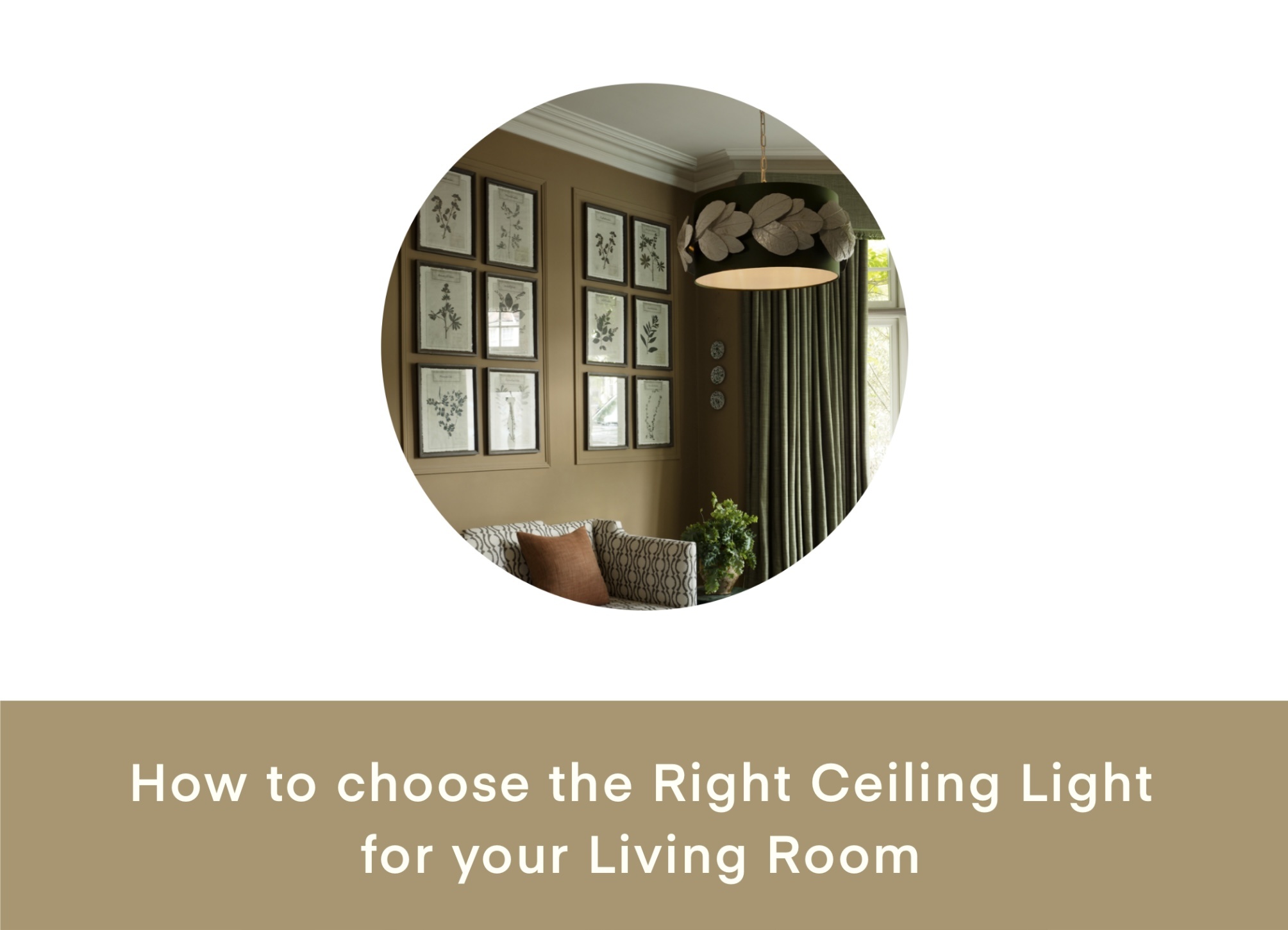
How to Choose the Right Ceiling Light for Your Living Room
Choosing the right ceiling light for your living room is one of the most important — and most commonly misunderstood — lighting decisions in the home. Ceiling height, room size and proportion all play a role, yet many living rooms are still lit by a single overhead fitting that never quite feels right.
In this first episode of The Home Lighting Masterclass, Lightbox Design Director Jack Inston shares professional insight from inside our lighting design studio, explaining how designers approach living room ceiling lighting — and how to make confident, considered choices that work in real homes.
Listen to the episode
(Embed Spotify player here)
Episode 1: How to Choose the Right Ceiling Light for Your Living Room
Why ceiling lighting matters in living rooms
Living rooms are multi-use spaces. They need to feel comfortable in the evening, practical during the day, and flexible enough to adapt to different activities.
Ceiling lighting should form the foundation of a living room lighting scheme — not attempt to do all the work on its own. In the episode, we explain why relying on a single “big light” often leads to flat, uncomfortable spaces, and why professional lighting design always considers ceiling lights as part of a wider, layered approach.
Start with ceiling height and room size
Before thinking about finishes or style, ceiling height and room size should always come first.
In the podcast, Jack explains how designers typically approach this:
- Low ceilings are best suited to flush or semi-flush ceiling lights
- Standard ceiling heights can accommodate semi-flush fittings or compact pendants
- Higher ceilings allow pendants or chandeliers to become a focal point
A simple sizing guide is also shared to help avoid choosing a ceiling light that feels either too small or overpowering once installed.
Explore our curated range of living room ceiling lights, selected for different ceiling heights and room sizes.
Flush, semi-flush, pendants and chandeliers — what works where
Not all ceiling lights behave the same way in a living room.
In this episode, we cover:
- When flush ceiling lights are the right choice, particularly for lower ceilings
- Why semi-flush ceiling lights are one of the most versatile options for living rooms
- How to size and position pendant lights so they feel balanced rather than intrusive
- When a chandelier can elevate a living room without overwhelming the space
View our flush and semi-flush ceiling lights for living rooms with lower ceilings.
Browse pendant ceiling lights suitable for living spaces.
Layered lighting and the 5–7 light point rule
Professional lighting design rarely relies on a single light source.
In the episode, we explain the 5–7 light point rule, which includes:
- Ceiling lights
- Wall lights
- Table and floor lamps
- Natural daylight
- Decorative or portable lighting
- Candle Light
This layered approach creates warmth, flexibility and atmosphere — and explains why ceiling lights should support a living room scheme rather than dominate it.
Dimmers, colour temperature and everyday living
Small technical decisions make a big difference to how a living room feels.
In Episode 1 we discuss:
- Why dimmer controls are now considered essential rather than optional
- How warm white light (around 2700K–3000K) creates more relaxed, comfortable living spaces
- Why cooler light temperatures rarely suit living rooms
These details are often overlooked, yet they have a significant impact on daily life.
Common living room ceiling lighting mistakes
Some of the most costly lighting mistakes are easy to avoid with the right guidance.
In this episode, we cover:
- Choosing ceiling lights that are out of proportion to the room
- Hanging pendants too low
- Ignoring ceiling height when selecting fittings
- Over-relying on the main ceiling light
- Forgetting about dimming and control altogether
Understanding these early helps avoid disappointment once lighting is installed.
Explore living room ceiling lighting with Lightbox
At Lightbox, we curate our living room ceiling lights based on real design principles — not trends alone.
You may find the following helpful:
- Flush ceiling lights for low ceilings
Each collection is designed to help you make confident, informed choices.
Frequently asked questions about living room ceiling lighting
What type of ceiling light is best for a living room?
The best ceiling light for a living room depends primarily on ceiling height, room size, and how the space is used.
For living rooms with lower ceilings (around 2.4 metres or below), flush or semi-flush ceiling lights are usually the best choice, as they provide even illumination without reducing head height or overwhelming the space.
In living rooms with higher ceilings (above 2.4 metres), pendant lights or chandeliers can be used more effectively. These allow for greater scale, help balance the proportions of the room, and can act as a visual focal point when positioned correctly.
In all cases, ceiling lighting should be considered as part of a layered lighting scheme, supported by wall lights and lamps, rather than relied on as the sole light source.
How big should a ceiling light be in a living room?
The size of a ceiling light in a living room should be proportionate to the room’s dimensions and ceiling height.
Our guideline is to add the room’s length and width together (in feet) to determine the ideal ceiling light diameter in inches. For example, a living room measuring 12 ft × 14 ft would typically suit a ceiling light around 26 inches (65 cm) in diameter.
Ceiling height is equally important. In rooms with lower ceilings (around 2.4 metres or below), smaller, flush or semi-flush ceiling lights help maintain balance and head height. In rooms with higher ceilings, larger pendants or chandeliers can be used more comfortably and often benefit from increased scale.
As a general rule, a minimum head clearance of 213 cm (7 feet) should be maintained from the floor to the bottom of any ceiling light or pendant in living spaces. This ensures the light feels visually balanced while remaining practical and unobtrusive.
Whether the ceiling light is intended to be a subtle source of ambient light or a focal point may influence the final size, but proportion and clearance should always come first.
Are flush ceiling lights suitable for living rooms?
Yes. Flush ceiling lights are ideal for living rooms with lower ceilings and can still feel design-led when chosen with the right scale, materials and light output.
Should living room ceiling lights be dimmable?
In most cases, yes. Dimmable ceiling lights allow you to adapt the mood of a living room throughout the day and evening and are now considered a standard expectation in modern homes.
Is one ceiling light enough for a living room?
Rarely. Most living rooms benefit from layered lighting, combining ceiling lights with wall lights, lamps and natural light to create a balanced and comfortable space.
The Home Lighting Masterclass was created to give homeowners clarity and confidence when it comes to lighting design — the most overlooked part of the interior process.
New episodes are released the first Tuesday of every month, each focusing on a specific room or lighting challenge, with practical advice drawn directly from our lighting design studio.


